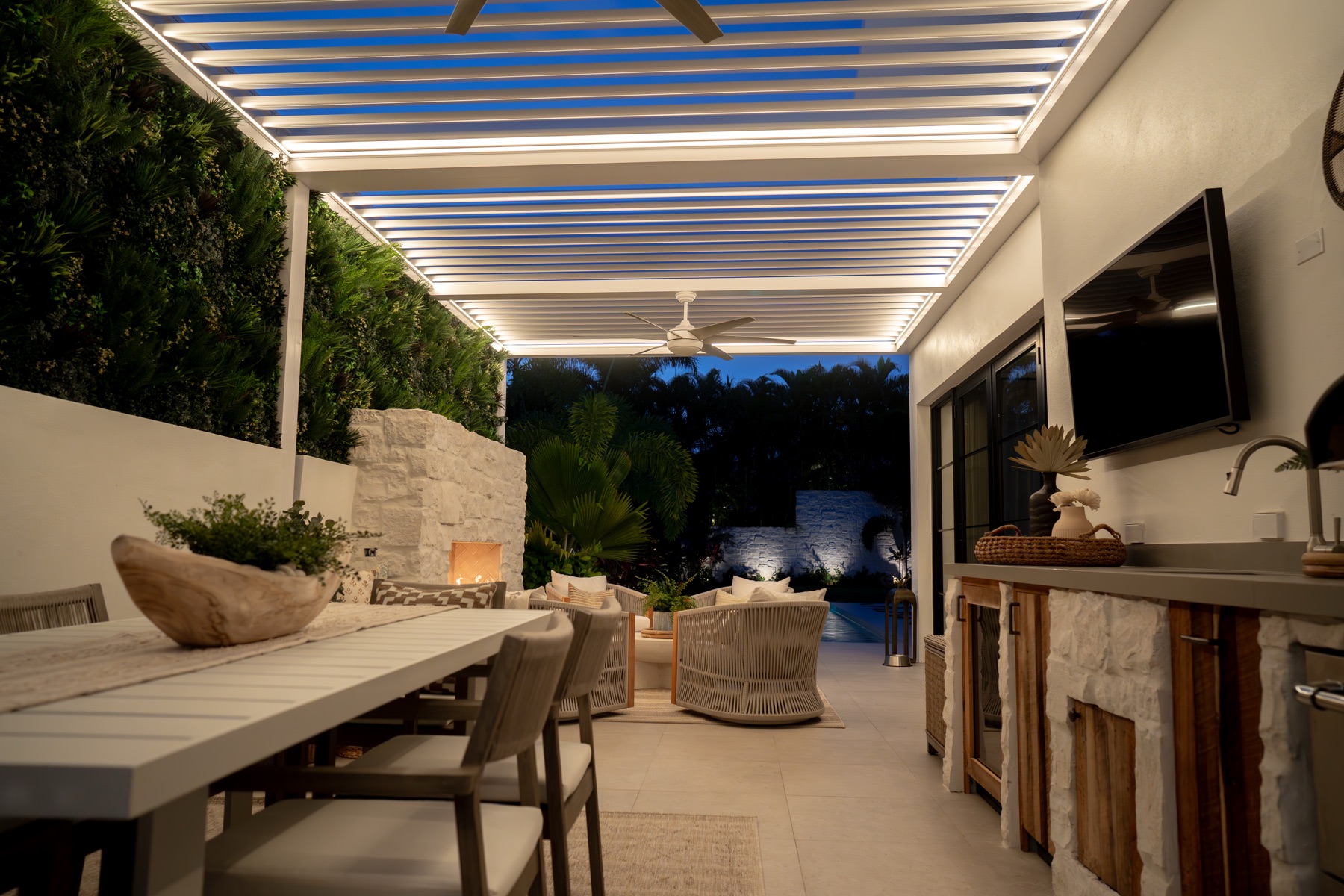
A pergola transforms a bare patio into a genuine outdoor room, but the material you build it from determines how that room performs five, ten, and twenty years down the road. The two most common choices are aluminum and wood, and the differences between them go far beyond appearance. This guide breaks down the aluminum pergola vs wood pergola debate across every factor that matters so you can invest with confidence.
Durability and Maintenance
This is where the gap between the two materials is widest. Wood is an organic material, and organic materials deteriorate. Even pressure-treated lumber or naturally rot-resistant species like western red cedar will warp, crack, and gray over time. In coastal climates like Los Angeles or the New York metro, the combination of sun, salt air, and seasonal moisture accelerates the damage. You can expect to stain or seal a wood pergola every one to three years, and eventually replace individual boards or entire rafters as they split.
Aluminum is inert. It does not rot, warp, splinter, or attract termites. Premium aluminum pergola systems use a powder-coated finish that resists UV fading and corrosion for decades without repainting. There is essentially zero pergola maintenance required beyond an occasional rinse with a garden hose. For homeowners who want a structure they can install and forget, aluminum is the clear winner.
Weather Performance
Southern California homeowners deal with intense sun, occasional high winds, and the rare but serious rainstorm. East Coast homeowners face snow loads, ice, and nor'easters. The best pergola material for either climate needs to handle environmental stress without compromising structural integrity.
Engineered aluminum systems are designed to meet specific wind and snow-load ratings. Many premium models carry Miami-Dade NOA approval, meaning they have been independently tested for hurricane-force winds. The extruded aluminum profiles are hollow, which gives them an exceptional strength-to-weight ratio, and integrated gutter channels handle rain without pooling or overflow.
Wood pergolas can be built strong, but achieving comparable wind and snow ratings requires significantly heavier timbers, additional hardware, and custom engineering. Wood also expands and contracts with moisture and temperature changes, which loosens fasteners over time. After a few harsh seasons, joints develop gaps and the structure loses the rigidity it had on day one.
Design Flexibility and Motorized Features
This is where the comparison tilts decisively toward aluminum. Modern aluminum pergola systems are designed as integrated platforms, not just shade structures. A motorized pergola with adjustable louvers can open fully to let in sunlight, angle to cast shade at any time of day, or close completely to create a watertight roof, all at the press of a button or a voice command to your smart home system.
Beyond the louvers themselves, aluminum frames are engineered to accept a full ecosystem of add-ons:
- Integrated LED lighting built into the louver blades or frame for ambient evening illumination
- Retractable screens for insect protection or privacy on demand
- Infrared heaters mounted flush in the beams for year-round comfort
- Glass walls or sliding panels to fully enclose the space
- Fan and speaker mounts concealed within the structural members
Wood pergolas simply cannot do this. You can hang string lights from a cedar beam, but you cannot rotate the roof, integrate retractable screens into the frame, or achieve a watertight seal. The technology gap between a motorized aluminum system and a traditional wood structure is roughly the same as the gap between a modern smart home and a cabin.
Cost Comparison: Upfront vs. Lifetime
Wood wins on sticker price, and it is not close. A contractor-built cedar or redwood pergola typically runs $8,000 to $18,000 depending on size and complexity. A comparable premium aluminum system starts around $25,000 and can exceed $60,000 with motorized louvers, integrated screens, heaters, and lighting.
But sticker price is not total cost of ownership. Over a fifteen-year period, a wood pergola will need:
- Staining or sealing every 1-3 years: $500-$1,500 per application
- Board replacement as members warp or crack: $1,000-$3,000
- Potential structural repair from termite or moisture damage: $2,000-$5,000+
- Your time — sanding, staining, and inspecting is a recurring commitment
An aluminum pergola costs nothing to maintain over that same fifteen-year window. When you add the accumulated maintenance spend to the original wood investment, the gap narrows considerably, and the aluminum system still looks and performs like new at the end of it.
Environmental Considerations
Both materials have a legitimate environmental case. Wood is renewable and sequesters carbon. Responsibly sourced cedar or FSC-certified lumber is a genuinely sustainable building material, especially for smaller structures. However, the chemical treatments, stains, and sealants required to maintain wood over time offset some of that advantage.
Aluminum is one of the most recyclable materials on earth. Premium pergola systems made from extruded aluminum can be recycled indefinitely at end of life with no loss of quality. The manufacturing process requires energy, but the longevity of the product, often 30+ years with no material degradation, means the per-year environmental impact is low. Additionally, a louvered aluminum roof can reduce cooling costs by managing solar gain, which translates to lower energy use over the life of the structure.
When a Wood Pergola Makes Sense
Wood is not the wrong choice for every project. It makes sense when:
- Rustic or natural aesthetic is the priority. Nothing matches the warmth of real wood grain, and for farmhouse, Mediterranean, or cottage-style homes, wood may be the better design fit.
- Budget is fixed and modest. If the total budget is under $15,000, a well-built wood pergola delivers genuine value and charm.
- The project is small-scale or DIY. Wood is easier to work with using standard carpentry tools, and pergola kits are widely available at home improvement stores.
- You enjoy hands-on maintenance. Some homeowners genuinely like the ritual of seasonal staining and care. If that is you, wood rewards the effort.
When an Aluminum Pergola Makes Sense
Aluminum is the stronger choice when:
- You want motorized features. Adjustable louvers, automated rain sensors, and integrated smart-home controls only exist in engineered aluminum systems.
- Zero maintenance matters. If your weekends are for using the patio, not maintaining it, aluminum eliminates the upkeep burden entirely.
- You live in a harsh climate. High winds, heavy snow, intense UV, salt air — aluminum is engineered for all of it.
- The span is large. Aluminum can cover wider areas with fewer support posts than wood, creating cleaner sight lines and more usable space.
- Long-term value matters. An aluminum pergola increases your home's resale value and never needs repair or replacement.
The Bottom Line
The aluminum pergola vs wood pergola question comes down to what you value most. Wood offers natural beauty and a lower entry price. Aluminum offers motorized technology, lifetime durability, and zero ongoing cost. For homeowners building a premium outdoor living space that they want to enjoy maintenance-free for decades, aluminum is the material that delivers.
If you are leaning toward a motorized louvered system and want to understand exactly what is possible for your space, the best next step is a conversation with someone who installs these systems every day.