Los Angeles has no single architectural identity — a Brentwood contemporary, a Pacific Palisades Spanish Colonial, and a Malibu beach house are three completely different design challenges. Getting a pergola to feel intentional rather than dropped-in requires matching the structure to the home's existing language.
Here's how we approach style selection for the most common LA home types.
Contemporary and minimalist homes
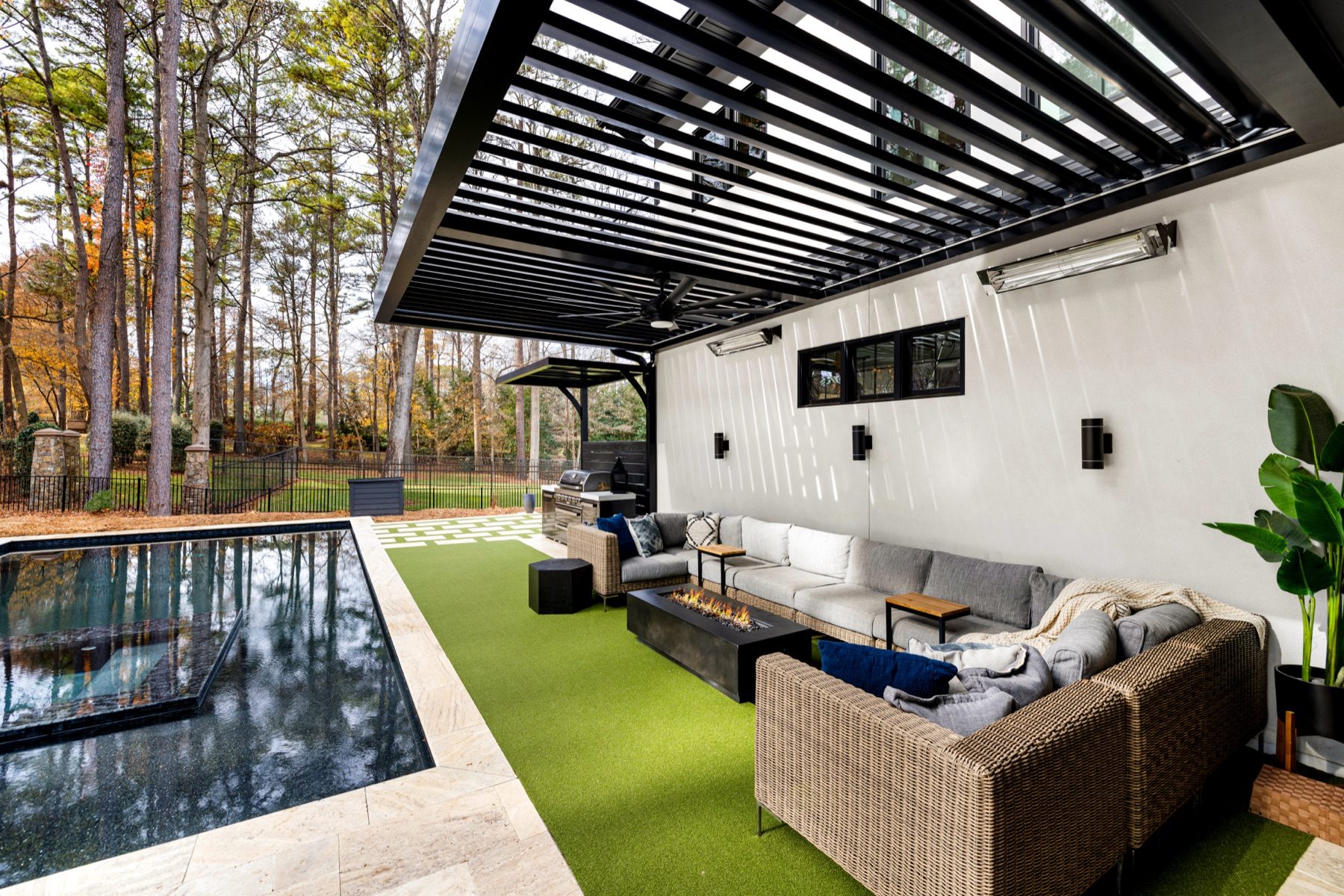
Contemporary LA homes — flat roofs, clean lines, floor-to-ceiling glass — call for the most architecturally refined pergola option: a low-profile louvered structure with a flat roofline, slim aluminum profiles, and a monochromatic finish that reads as an extension of the building rather than an addition.
Key choices for this style:
- Color: Matte black, anthracite gray, or the same color as the home's exterior trim. Avoid contrasting colors — the goal is to blur the line between indoor and outdoor architecture.
- Profile: The slimmest available beam and post dimensions. Structural aluminum allows spans that wood can't match without visual bulk.
- Roof system: Motorized louvers for maximum flexibility, or a fixed flat roof with concealed gutters for a completely clean silhouette.
- Add-ons: Integrated LED lighting in the beams, retractable side screens for privacy. No visible hardware.
Mediterranean and Spanish Colonial
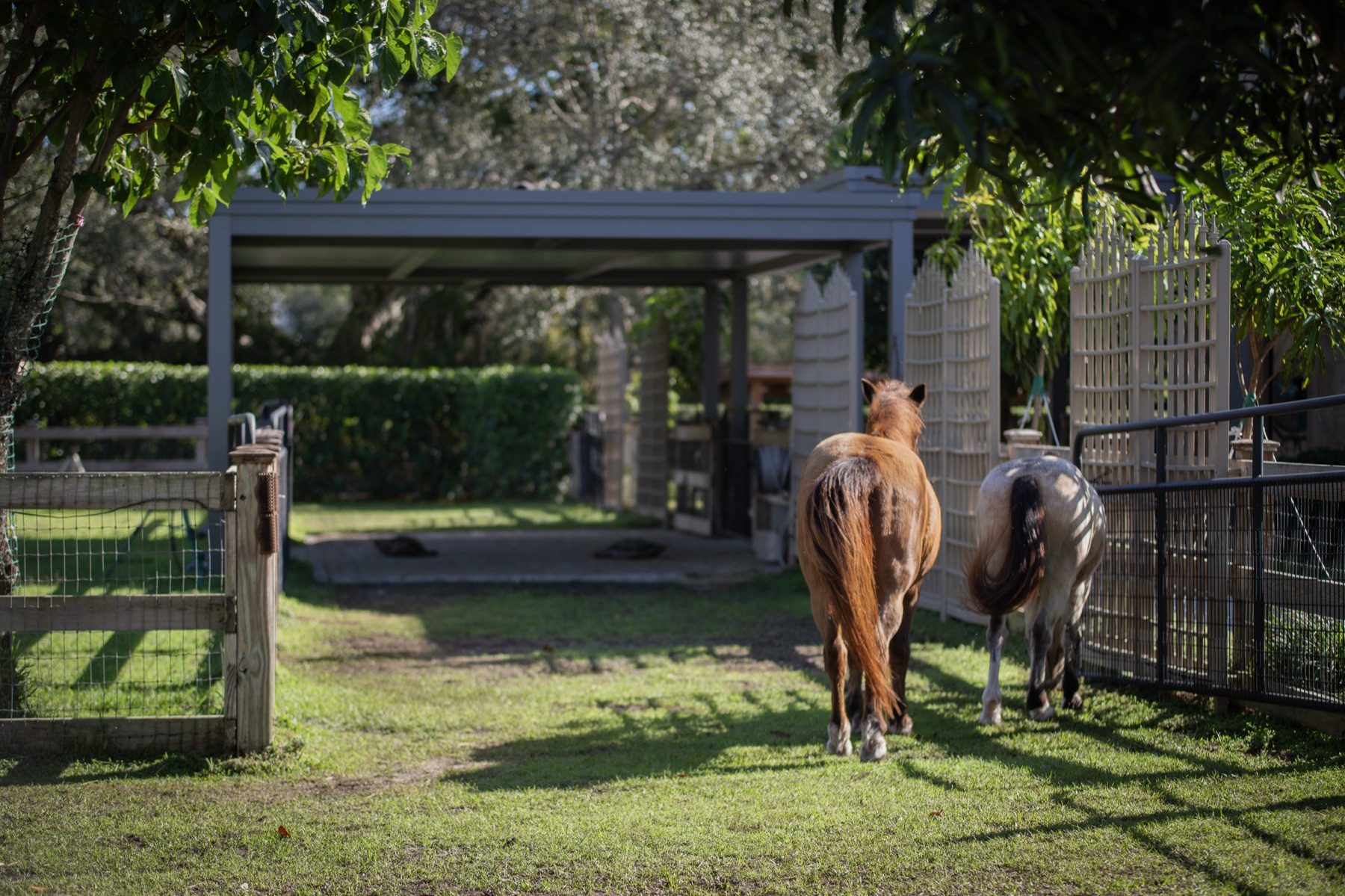
Spanish-influenced homes — prevalent across Bel Air, Los Feliz, and Silver Lake — have warm terracotta tones, clay tile roofs, and ornate ironwork. A stark modern pergola in matte black reads as a conflict. What works here:
- Color: Warm whites, sand tones, or a wood-look aluminum finish that mimics timber without the maintenance. The wood-look finish line offers convincing grain textures in teak, walnut, and pine tones.
- Form: A pergola with slightly heavier proportions and corbel-end detailing — subtle ornamental flourishes at the beam ends — fits the Mediterranean scale better than razor-thin contemporary profiles.
- Integration: Terracotta pavers, string lights, climbing greenery at the posts. The structure should feel earned by the landscape, not imposed on it.
Beach houses and coastal modern
Malibu, Manhattan Beach, and the coastal homes of Newport Beach share a common aesthetic: bleached wood tones, natural textures, relaxed geometry. The pergola here should feel effortless rather than engineered.
- Color: Driftwood gray, coastal white, or warm sand — finishes that reference natural materials without requiring the maintenance of wood.
- Structure: A cabana-style structure over a pool deck, or a freestanding louvered pergola on a rooftop deck. Coastal homes often have outdoor-first floor plans, so the pergola functions as the main living room rather than an accent.
- Add-ons: Outdoor heaters for cool beach evenings, integrated misting for the hot interior valley months, retractable screens for wind protection near the water.
Transitional and traditional homes
The large Westside homes — Hancock Park, Cheviot Hills, Toluca Lake — often have traditional or transitional architecture that mixes classic forms with updated finishes. These homes tend to have larger yards and more formal outdoor spaces.
- Scale: Go larger. A 20×24 or 20×28 structure suits a formal outdoor dining and entertaining area. Smaller pergolas can feel undersized against a traditional two-story facade.
- Color: Classic white or warm cream, or a soft sage that references garden plantings. Match the trim color of the home's exterior.
- Surrounds: Boxwood hedges, fountains, formal plantings around the structure posts. The pergola reads best when it anchors a landscaped outdoor room rather than sitting on a bare concrete patio.
The rule that cuts across every style: the pergola finish should match or reference at least one existing element on the home — the trim color, the front door, the window frames, the landscape. A pergola that introduces a completely new color to the palette is the hardest to make look intentional.
What about color choice specifically?
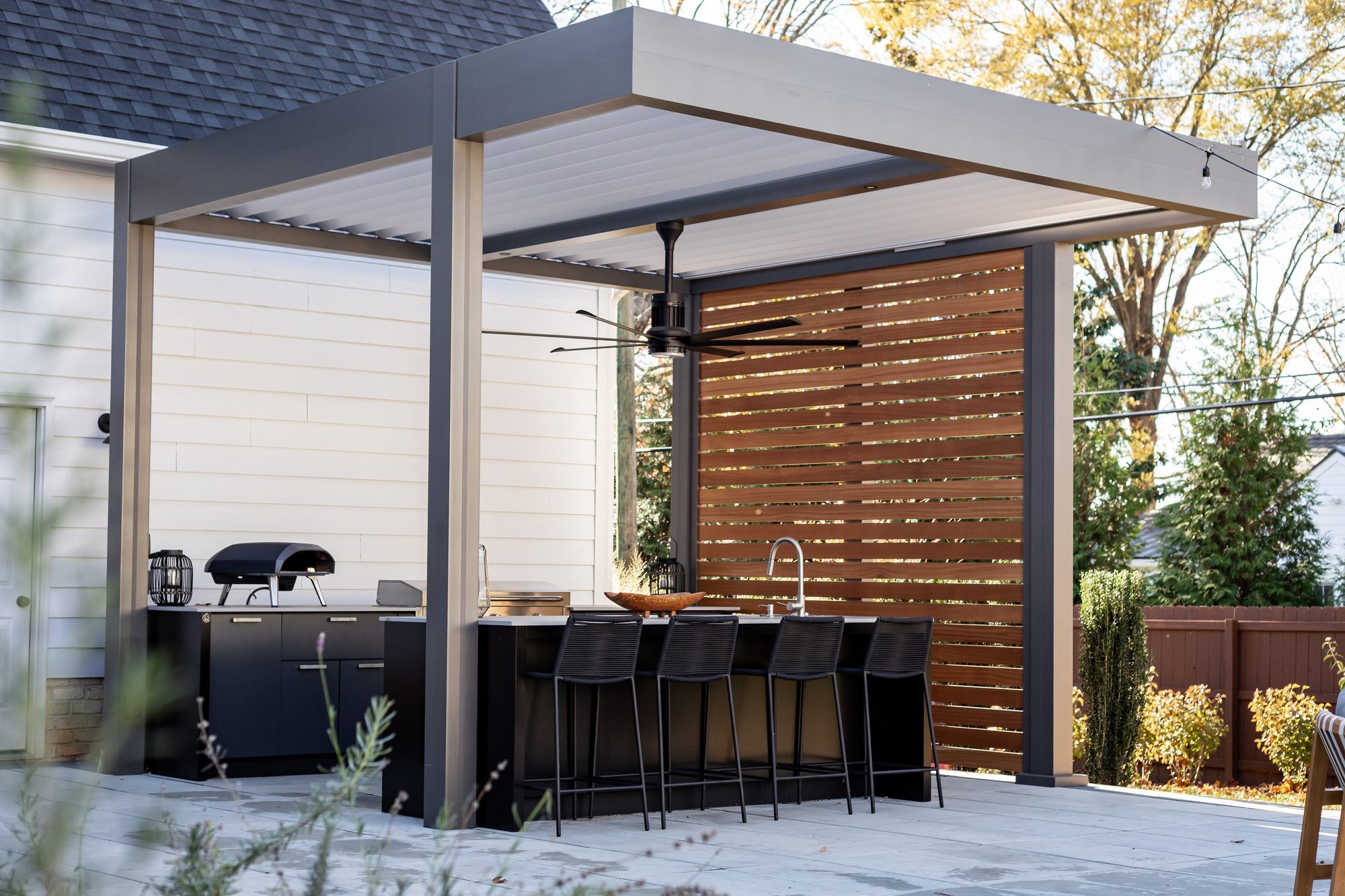
Our structures come in three finish tiers: a standard color palette of classic neutrals, a wood-look range with textured grain finishes, and a custom color program covering any RAL code. For most LA homes, the right answer is in the standard or wood-look range. Custom color becomes relevant when you're matching a very specific exterior paint or architectural metalwork.
On a site visit, we bring physical finish samples and can produce a 3D render of your chosen structure in your actual yard. That's the fastest way to make a confident color and style decision.