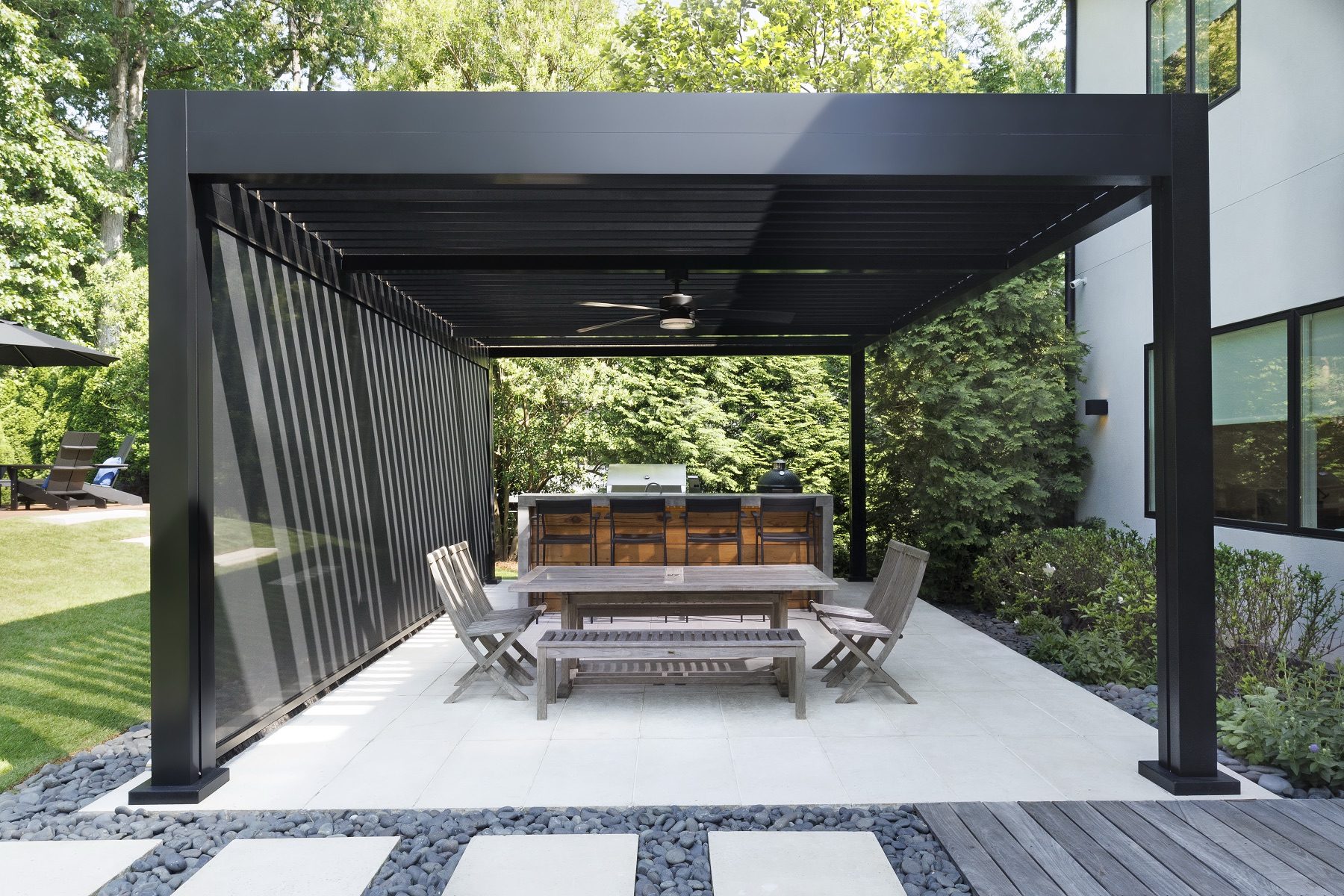
Size is the decision most first-time pergola buyers get wrong. Go too small and the structure looks like a sunshade dropped in the middle of your yard. Go too large and it eats the space instead of defining it. Getting this right before you commit saves a significant amount of money and regret.
Here's how to think through it.
Start with how you'll use the space
Before you measure anything, answer one question: what will this space actually be used for? The answer determines the footprint more than the yard size does.
- Outdoor dining table: A 6-person dining set typically needs a 12×14 ft minimum footprint under the pergola, with 3 ft of clearance on each side to pull chairs out comfortably. That puts you at roughly a 14×16 or 14×20 structure.
- Lounge and seating area: A sectional sofa + coffee table setup needs roughly 12×12 ft. Add a separate chair grouping and you're at 14×14 or larger.
- Dining + lounge combined: This is the most common request. Plan for at least 16×20 — two defined zones under one structure. This is where most of our residential projects land.
- Pool bar or cabana: Typically 10×14 to 10×20, depending on bar length and seating configuration.
- Full outdoor room: 20×20 and up. At this size you're adding screens, heaters, and often a kitchen island. Treat it like an interior room in terms of planning.
Common size ranges and what they look like
| Size | Best for | Fits |
|---|---|---|
| 10×10 | Small accent space, side patio | 2-seat bistro, small loveseat |
| 10×14 | Compact dining | 4-person dining table |
| 14×20 | Single-use outdoor room | 6-person dining or full lounge |
| 16×20 | Dining + lounge | Table for 6 + seating group |
| 20×20+ | Full outdoor room, large entertaining | Kitchen, dining, lounge zones |
The most common mistake: choosing a size based on what "looks right" on paper, then discovering the actual furniture doesn't fit with enough clearance to move around. Always start with the furniture layout and work backwards to the structure size — not the other way around.
How to measure your space
Walk your yard and measure the area you're considering. Then lay it out on paper (or tape it out on the ground with painter's tape — this is the most underrated step in outdoor planning). Key things to account for:
- Setbacks from the house: If the pergola is attached, the depth typically runs from the house wall outward. Know where your door, windows, and outdoor outlets are — the structure should clear them cleanly.
- Access paths: Leave at least 3 ft on any side where people will walk to enter or pass through.
- Property context: How will the structure look from inside the house? From the main seating area in the yard? A pergola that looks great at ground level can feel imposing when viewed from an upstairs window if it's oversized.
- Existing features: Trees, planters, outdoor kitchens, and pool equipment all affect where posts can go and what clearances are needed.
Attached vs. freestanding — does it change the size?
Yes, in one important way. An attached pergola (wall-mounted on one side) is limited in depth by the house structure — most attached systems run 10–18 ft deep before requiring additional engineering. Width is more flexible. Freestanding structures have no such constraint and can be sized symmetrically in any direction.
For larger entertaining spaces — anything above 16×20 — freestanding is usually the cleaner architectural solution. It also gives you more flexibility on placement if the ideal spot isn't directly adjacent to the house.
What we recommend for most LA homes
The majority of our residential projects in Los Angeles land between 14×20 and 16×20. This range covers the most common use cases — outdoor dining that seats 6–8, or a dining-plus-lounge setup — without overwhelming a typical LA backyard.
Homes in Malibu, Bel Air, and the larger Westside properties often go to 20×20 and above, particularly when the outdoor space is an intentional extension of the interior living area. Smaller hillside lots in Silver Lake or Echo Park tend toward 10×14 or 12×16.
One consistent piece of advice we give clients: if you're between two sizes, go larger. Outdoor furniture reads bigger in a showroom than it does in an open yard. The structure will fill in visually once furniture is placed, and you'll almost never hear someone say their pergola feels too spacious.
What happens at the consultation
When we do a site visit, sizing is one of the first things we work through together. We'll walk the space, ask about your furniture plans, check sightlines from inside the house, and mark out the footprint on the ground so you can actually stand in it and feel the scale before anything is ordered. It takes about 20 minutes and eliminates most of the guesswork.
We build in custom sizes — the structure doesn't have to be a standard dimension to work structurally. If 13×17 is the right fit for your space, that's what we build.