Clients ask this question constantly, and for good reason — contractors, designers, and homeowners all use the terms differently. Here's a clear breakdown of what each structure actually is, what it does, and when one is the better choice.
The traditional distinction
Historically, a pergola was an open-roof structure — a framework of posts and beams with an open lattice or bare rafters overhead, designed for climbing plants or hanging lights. It provided structure and partial shade but not weatherproofing.
A patio cover was a solid-roof structure — typically a gabled or flat roof of wood, metal, or polycarbonate — that provided full rain and sun protection.
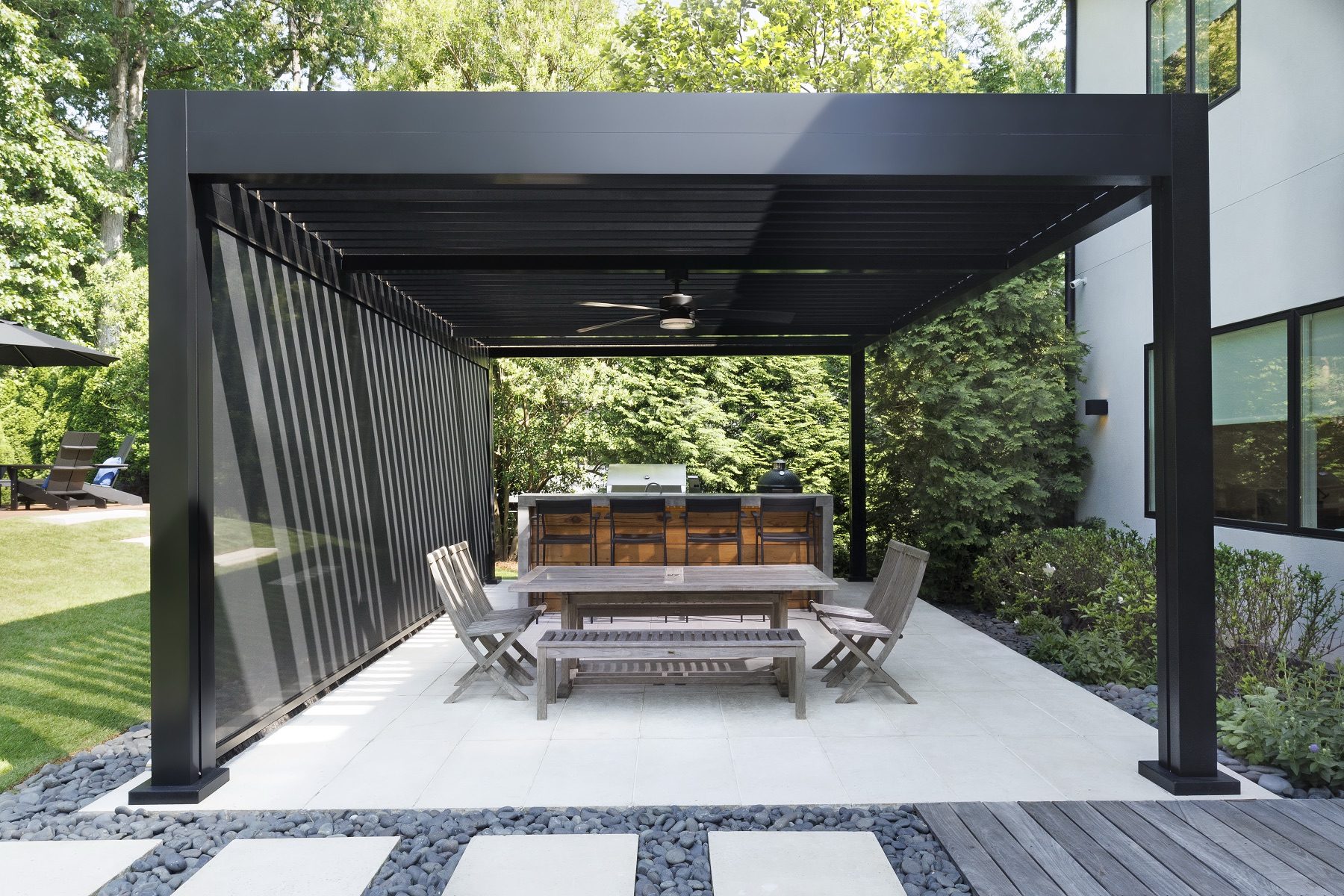
That distinction has mostly collapsed in the premium aluminum market. Modern aluminum pergolas with motorized louvered roofs close completely to become weatherproof covers. The category has merged.
What the terms mean today
In practice, here's how the structures differ in today's market:
Modern Pergola
- Adjustable or fixed aluminum roof system
- Can be motorized with rain sensors
- Built-in gutters when louvered
- Architectural — designed to complement the home
- Freestanding or wall-attached
- Higher design value and resale impact
Traditional Patio Cover
- Solid fixed roof — wood, metal, or polycarbonate
- Full rain and sun protection
- Simpler construction
- Usually wall-attached to the house
- Lower upfront cost
- Less design flexibility
When a traditional patio cover makes sense
If your primary goal is permanent, no-maintenance overhead protection and cost is a factor, a traditional patio cover still does the job. They're common in older LA homes where a contractor has already extended the roofline, and they work fine for covered parking or a utility-focused outdoor area.
The limitation: a solid polycarbonate or corrugated metal cover tends to look utilitarian. It solves the weather problem but doesn't add the outdoor living upgrade that a well-designed pergola does.
When a modern pergola is clearly better
For outdoor living — dining, entertaining, lounging — a premium aluminum pergola is the better investment almost every time. Here's why:
- Adjustability. A louvered roof lets you control shade and airflow by the hour. In LA, that matters across every season.
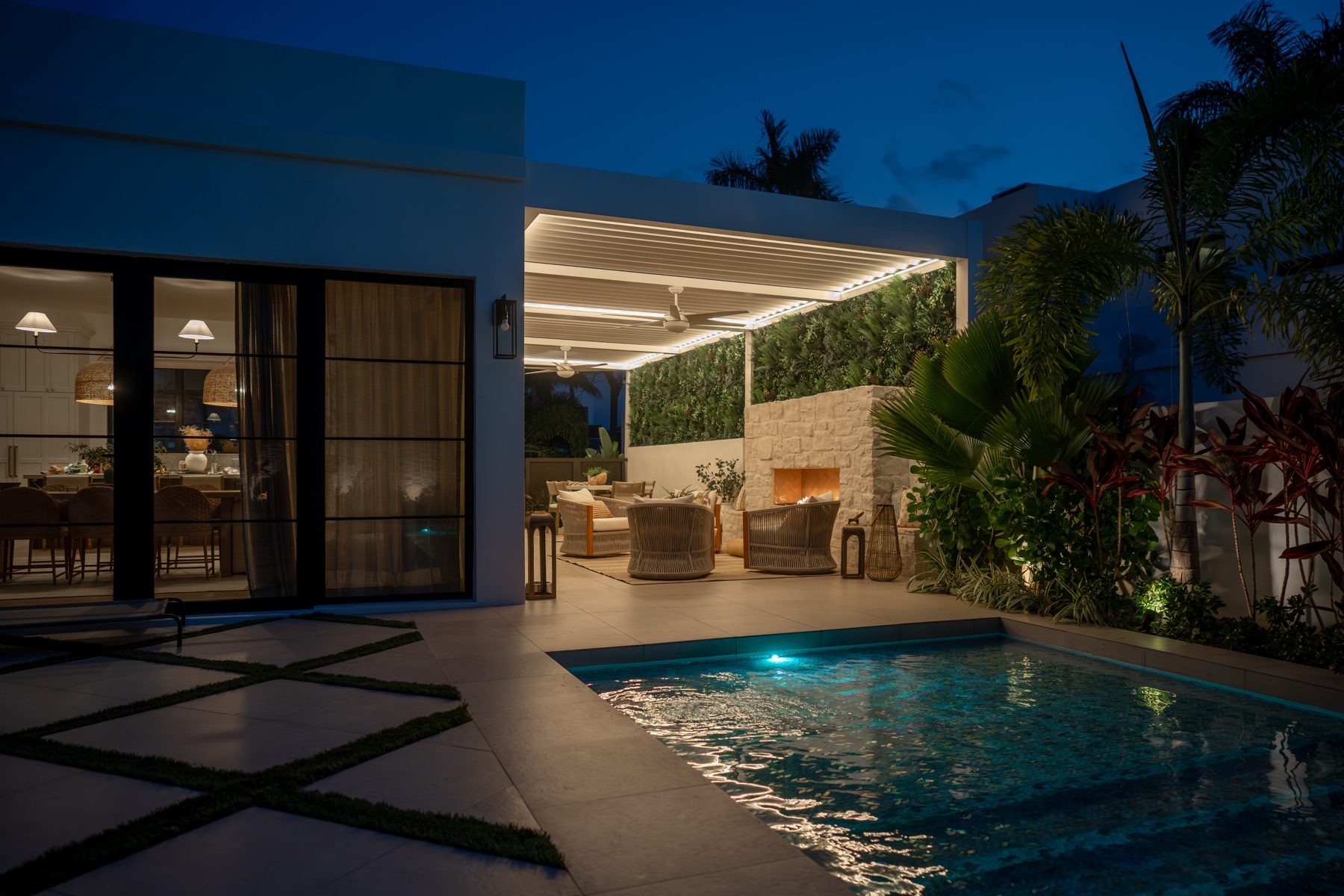
- Design intent. A pergola reads as architecture. A patio cover reads as utility. For homes in Bel Air, Pacific Palisades, or Newport Beach — where outdoor space is a major selling point — the design difference translates to real value.
- Integration. Modern pergola systems integrate screens, heaters, fans, outdoor kitchens, and lighting. A traditional cover is a roof — it doesn't serve as a platform for the rest of the outdoor room.
Bottom line: if you're asking whether to get a "pergola" or a "patio cover," you're probably shopping for a premium outdoor living upgrade — in which case a modern aluminum pergola with a louvered or fixed aluminum roof is the answer. The traditional corrugated cover is a different product category entirely.